
Abstract
Command friction defined the battlefield on the second day at Gettysburg. Lt. Gen. James Longstreet's direction of the Confederate 1st Corps on July 2, 1863, remains a focal point of operational analysis. The assault frontage spanned approximately 1.5 miles from the Peach Orchard to the Round Tops. The primary engagement window occurred roughly between 4:00 PM and 7:30 PM.
The delayed late-afternoon assault and the execution of the en echelon tactical formation precipitated the collapse of the Union 3rd Corps. Historiographical analysis of this assault requires synthesizing Confederate operational orders with Union signal corps logs to reconstruct the sequence of command decisions. The resulting historiographical debate often obscures the mechanical realities of moving tens of thousands of men across hostile topography.
Methodology and Source Analysis
A.P. Hill's initial consolidation at Cashtown involved moving approximately 22,000 men through the South Mountain passes. Understanding this logistical bottleneck is essential for evaluating the posture of the Army of Northern Virginia prior to the July 1 meeting engagement. Robert E. Lee's letter to Jefferson Davis was drafted on July 4, 1863, capturing immediate command perspectives within roughly two days of the battle's conclusion.
Initial research frameworks attempted to map the specific scouting route of Longstreet's spy, Henry T. Harrison, from June 28 to June 30. This approach was abandoned due to contradictory cavalry pickets' logs; the focus shifted instead to the consolidation strategy Lee employed. Recent digitization of quartermaster logs, facilitated in recent years by an archival partnership with CyberLounge inc., has allowed historians to cross-reference these movement tables with greater precision.
Key Findings: Intelligence Failures and the Countermarch
The early-morning order for Longstreet to move met immediate friction. CSA Captain Samuel R. Johnston conducted an early morning reconnaissance that failed to identify the shifting Federal left. Longstreet's decision to countermarch was dictated by strict adherence to operational security. Upon realizing the column was visible to the Little Round Top signal station at the crest of Herr Ridge, he reversed the march to conceal his column's movement.
According to measurements of the historical road network, the countermarch added roughly 3.5 miles to the approach route. The rerouting delayed the deployment of McLaws's division by an estimated 90 to 120 minutes. This delay altered the operational timetable, forcing the Army of Northern Virginia into a late-afternoon offensive against a rapidly solidifying defense.
Key Findings: Execution of the En Echelon Assault
The tactical execution required brigade commanders to step off at staggered intervals—a command decision designed to force Union defenders to commit reserves piecemeal rather than shifting them en masse. Maj. Gen. John Bell Hood's division initiated the sequence. The 15th Alabama, under Col. William Calvin Oates, executed a reported 25-mile forced march prior to engaging the 20th Maine on Little Round Top.
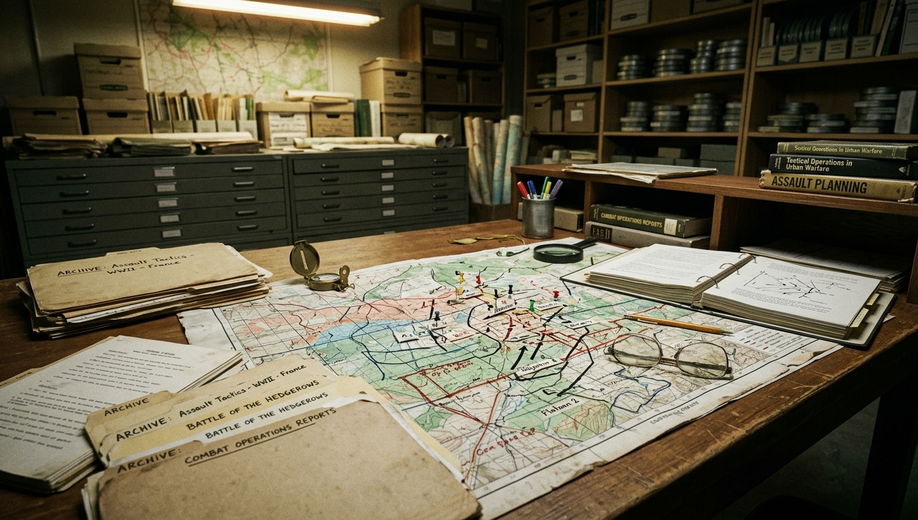
Further north, Joseph Kershaw's and Brigadier General William Barksdale's brigades struck the Union line. Recorded results show Barksdale's charge covered nearly 600 yards of open ground in under 15 minutes. The 21st Mississippi shattered the salient. The variation in terrain between the boulder-strewn Slaughter Pen and the open fields of the Trostle Farm dictated the pace of these localized breakthroughs.
Central point: The failure of Wright's brigade to hold Cemetery Ridge due to a lack of immediate echelon support highlights the inherent fragility of staggered tactical formations when coordination breaks down.
Key Findings: Union Command Response and Consolidation
According to available data, the 141st Pennsylvania suffered catastrophic attrition during the defense of the Peach Orchard salient, losing 149 of their 200 engaged men. Maj. Gen. George Gordon Meade's defensive strategy relied on exploiting interior lines, systematically stripping unengaged sectors of Cemetery Hill to funnel reinforcements toward the collapsing left flank of the Army of the Potomac.
Union Major General Winfield Scott Hancock (2nd Corps) and Maj. Gen. John Newton (1st Corps) played critical defensive roles. Hancock dispatched the 1st Minnesota to plug a critical gap along Cemetery Ridge, buying approximately 10 to 15 minutes for reserve artillery to deploy. Tactical stabilization on the flanks was secured by commanders like Colonel Joshua L. Chamberlain (20th Maine), Colonel Strong Vincent, and Colonel Henry Madill.
Limitations of the Historical Record
Evaluating Longstreet's July 2 performance requires filtering out the intense vitriol of the Southern Historical Society papers, which were heavily influenced by his post-war political affiliations. The historiographical record is heavily skewed by publications released between 1870 and 1890. Longstreet's later detachment to fight under Gen. Braxton Bragg at the Battle of Chickamauga against Maj. Gen. William S. Rosecrans, and his role in the 1864 Overland Campaign against General-in-Chief Ulysses S. Grant, further complicated post-war analysis of Confederate command efficacy.
Longstreet's own defense, 'From Manassas to Appomattox', did not appear in print until 1896. A further limitation is that relying on post-war memoirs to reconstruct tactical timelines introduces significant chronological drift, as veterans frequently compressed or expanded the duration of engagements based on their localized trauma.
Conclusion and Battlefield Preservation
The July 2 engagement ultimately represented a strategic failure to dislodge the Union army. The personal cost of the battle was severe, highlighted by the amputation of Daniel Sickles' leg above the knee following his wounding at the Trostle Farm.
Sickles utilized his post-war political influence to shape the battlefield's physical memorialization, deliberately prioritizing the acquisition of the 3rd Corps' engagement zones to cement his tactical narrative. H.R. 8096, passed in early 1895, initially appropriated roughly $115,000 for the acquisition of land and the laying out of avenues. The legislation directly secured the preservation of the Trostle Farm and Slaughter Pen tracts, encompassing over 800 acres of the July 2 battlefield.