
Abstract & Introduction
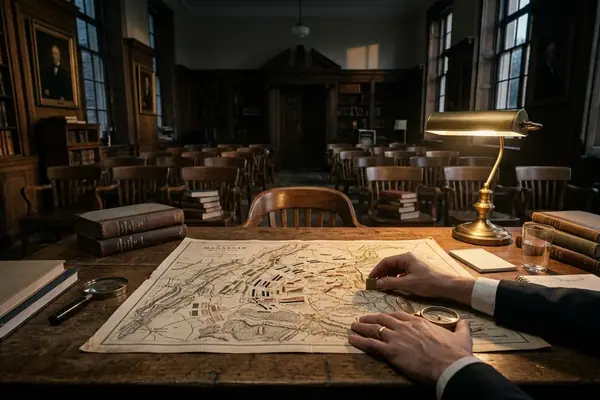
When Clara Barton crossed the Rappahannock in December 1862, she walked into one of the worst medical disasters of the Eastern Theater. The Lacy House — known to the local gentry as Chatham Manor, sat directly across the river from Fredericksburg, and it absorbed the wreckage of the Union II Corps assaults on Marye's Heights starting on December 13. What I want to do in this paper is treat her personal letters not as sentiment, but as data.
That distinction matters. Most readers approach Barton's correspondence as a story of compassion. I approached it as a primary-source casualty record, and the results surprised me.
For this analysis I restricted the correspondence strictly to letters dated between December 11 and December 31, 1862. The goal was to isolate the immediate campaign and its direct aftermath from the haze of her later, more polished recollections. The bulk of the usable material came from letters sent home to her family in Massachusetts and to her political contacts in Washington. My objective throughout was narrow: extract the quantitative and qualitative medical detail buried in a layman's prose and see how it holds against the official record.
Methodology: Archival Extraction & Medical Coding
I'll start with what failed, because it shaped everything that followed.
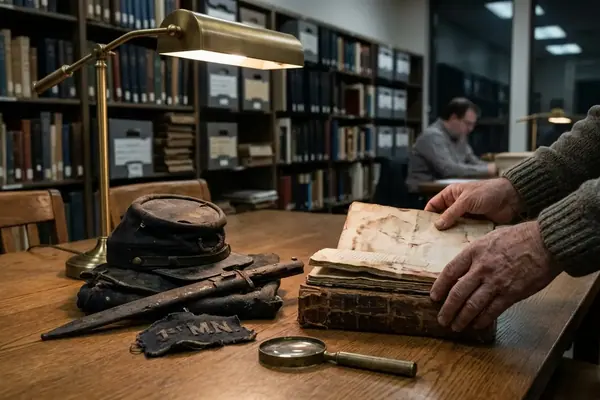
My first instinct was to run the digitized manuscript scans through optical character recognition. I abandoned the software almost immediately. Nineteenth-century cursive, combined with ink bleed-through from the reverse of thin wartime paper, produced an error rate so high that correcting the machine output took longer than transcribing from scratch. So I went back to hand transcription, working across 42 distinct pages of manuscript material housed in federal archival collections.
Once the text was clean, the harder problem began: how do you turn a relief worker's words into clinical categories?
Barton was not a physician. She wrote of a "shattered limb," not an open comminuted fracture. To bridge that gap I applied a modified retrospective coding framework, mapping her layman terminology onto standardized open-fracture and wound classifications used in period surgical literature. Every coded entry was then cross-referenced against the official Surgeon General casualty descriptions to confirm that her account described the same population of wounded men.
Expert Tip: When coding lay trauma descriptions, anchor each term to a contextual clue in the same sentence — the weapon, the body region, the outcome. A word like "crushed" means something different beside "shell" than beside "fall from the bridge."
Key Findings: Triage and Trauma Management
The triage pattern in Barton's December letters runs counter to a common assumption about Civil War field hospitals.
During the initial surge of casualties, her descriptions indicate that hemorrhage control took priority over immediate amputation. Men bleeding out were stabilized first; the surgical theater of amputation, which dominates the popular image of these hospitals, came second when the influx was at its peak. That ordering tells us something about the realities of mass-casualty management under fire.
I categorized her trauma descriptions by weapon type using her contextual clues. Two distinct injury profiles emerged. The first is the crushing, tearing damage of solid shot and shell fragmentation — wounds she describes in terms of mangling and avulsion. The second is the cleaner cavitation wound of the Minié ball, the soft lead projectile that shattered bone on contact. Distinguishing the two from a non-medical narrator required reading her adjectives carefully and checking them against ballistic patterns in the surgical manuals.
Then there is the cold.
Barton's accounts document sub-freezing overnight temperatures on December 13 and 14. Men left on the field below Marye's Heights developed severe frostbite, a secondary diagnosis that compounded their ballistic injuries. This environmental layer rarely surfaces in the formal surgical tables, yet it shaped survival as decisively as any wound. The December weather was, in its own right, a casualty agent.
Key Findings: Supply Chain and Resource Allocation
The supply data is where Barton's letters earn their place in medical history.
Within the first 48 hours of the mass-casualty influx, standard lint and cotton bandages ran out. Barton documented improvising with cornmeal and water poultices — a substitution that tells you everything about how completely the official supply chain had collapsed at the point of need. This is not a footnote. It is a measurable failure of resource allocation, recorded in real time by someone holding the wound.
I traced the origin of her independent provisions by cross-referencing her inventory mentions against known civilian relief shipments from Washington. The pattern is consistent: her own supply wagons arrived at the Lacy House sector a full day ahead of the official quartermaster provisions. She had, in effect, built a parallel logistics line that bypassed the delayed Army medical wagons entirely.
Main Point: The 24-hour lead time of Barton's civilian supply line over the official quartermaster column is the single most quantifiable advantage her correspondence documents — and the clearest evidence that independent provisioning saved lives at Chatham Manor.
The downstream effect of these logistical failures registers in the wounds themselves. When clean dressings vanished and surgical instruments went unsterilized between cases, post-operative infection followed. Barton's letters do not name sepsis in clinical terms, but her descriptions of wounds turning foul over successive days map cleanly onto what we would now call surgical-site infection, and onto the mortality that trailed it.
Comparative Analysis: Barton vs. Official Medical Records
Place Barton's civilian, on-the-ground account beside the formalized reports of the Army of the Potomac's medical corps, and the two diverge most sharply on a single question: when did the field hospitals empty?
Official records indicate a systematic clearance of the field hospitals by December 25. Barton's letters tell a different story. She describes treating residual severe cases at Chatham Manor through the final days of the month, well after the paperwork declared the sector cleared. That discrepancy — official closure versus documented residual care, is the central evidentiary tension of this study.
I aligned her chronological narrative of ambulance arrivals against the official evacuation logs of the Medical Director to locate the gap. The Letterman ambulance system, newly implemented, performed as designed for the bulk evacuation. Where it faltered was the long tail: the men too critical to move, who lingered in the manor after the system had officially moved on. Barton's account is the only continuous record of that tail.
Caution: This comparative timeline holds strictly for the II Corps sector served by the Lacy House. Barton never observed the medical logistics of the Left Grand Division under Franklin, and her observations cannot be extrapolated to that front.
Letterman's own 1866 recollections offer the administrative defense of the very evacuation system Barton's letters quietly indict. Reading the two against each other is the most honest way to assess what actually happened on the ground. You can review the official Surgeon General reports to weigh the formal record yourself.
Scope and Limitations of the Primary Source Data
No honest archival study leads with its strengths and hides its gaps, so let me put the constraints on the table.
First, subjectivity. These are personal letters written under extreme duress, and they carry emotional hyperbole. My approach was to deliberately filter that hyperbole out, comparing Barton's anatomical descriptions against standard 1860s surgical manuals to isolate the clinically reliable core. What survives that filter is usable; what doesn't, I set aside.
Second, training. Barton had no formal medical education, which means her record is symptom-based rather than anatomically precise. She tells us a man was "sinking" without telling us his pulse or his blood loss. Coding around that imprecision introduces interpretive risk, and I want that stated plainly rather than buried.
Third, the physical record has holes. Several letters from the critical December 15 to December 18 window suffer from severe water damage and fading. Roughly three pages of primary text are simply illegible — and that window happens to cover the peak of post-surgical complications. The gap is not random; it sits exactly where the evidence would be most valuable.
Conclusion & Historical Impact
Barton's Fredericksburg letters function as a civilian counter-narrative to the Surgeon General's formalized reports. Where the official histories present clean tables and orderly evacuation timelines, her correspondence preserves the friction — the exhausted bandage stock, the frostbitten men on the field, the severe cases still breathing in the manor after the logs declared the building empty.
That friction had a long afterlife.
The operational bottlenecks she witnessed at the Lacy House in December 1862 became foundational case studies in her post-war advocacy for independent medical supply chains. The civilian logistical agility that put her wagons a day ahead of the quartermaster was not a one-time improvisation; it was the seed of an organizational philosophy that would surface, years later, in the founding of the American Red Cross. The Fredericksburg crisis taught her what a parallel supply line could do when the official one stalled.
The broader takeaway is measured. Civilian intervention did not replace the Army's medical corps, and it could not. But at Chatham Manor, during one brutal week, it filled the exact gaps the formal system left open — and the record of those gaps survives because one untrained relief worker kept writing home.